Hazardous Area Cable Glands

Category: Hazardous Area Cable Glands

Hazardous Area Cable Glands for IECEx Installations

Inatex supplies IECEx-certified hazardous area cable glands designed for secure cable entry in Zone 1 and Zone 2 explosive atmospheres. Our range includes explosion proof (Ex d) and increased-safety (Ex e) glands suitable for armoured and unarmoured cables across oil & gas, mining, marine and heavy industrial applications.

Cable glands must be selected according to protection concept, ingress protection rating, cable construction and temperature classification. Solutions are available in brass, stainless steel and corrosion-resistant materials to suit offshore and high-vibration environments.

For complete cable entry systems including bushings, conduit and accessories, refer to our hazardous area cable glands and bushings overview.

News
Product News

Introducing the Warom BHY Explosion-Proof Horn Loudspeaker

Inatex is pleased to introduce the Warom BHY Explosion-Proof Horn Loudspeaker, designed for industrial communication and public address systems operating in potentially explosive gas and dust atmospheres. Suitable for Zone 1 and Zone 2 gas hazardous areas, and Zone 21 and Zone 22 dust hazardous areas, the BHY combines robust

Read More »
Warom HCBK-Z IECEx explosion-proof telephone installed in a hazardous area industrial plant
Product News

New IECEx-Certified HCBK-Z Explosion-Proof IP Telephone for Hazardous Areas

The new HCBK-Z IECEx explosion-proof telephone provides reliable IP communications for hazardous industrial environments where explosive gas, combustible dust and high ambient noise make conventional telephone equipment unsuitable. Designed for Zone 1 and Zone 2 gas environments and Zone 21 and Zone 22 combustible-dust environments, the Warom HCBK-Z combines robust

Read More »
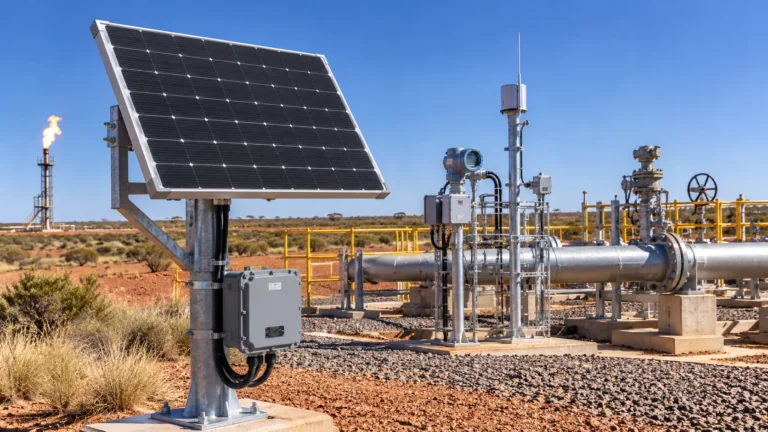
IECEx solar panels
Product News

IECEx Solar Panels: New Possibilities for Remote Hazardous Area Power

Australia’s industrial facilities are often separated by distance. Across oil and gas, resources, processing and infrastructure projects, relatively small electrical loads can be located hundreds of metres, or sometimes considerably further, from an established power supply. Providing power to remote equipment can therefore require significantly more infrastructure than the load

Read More »